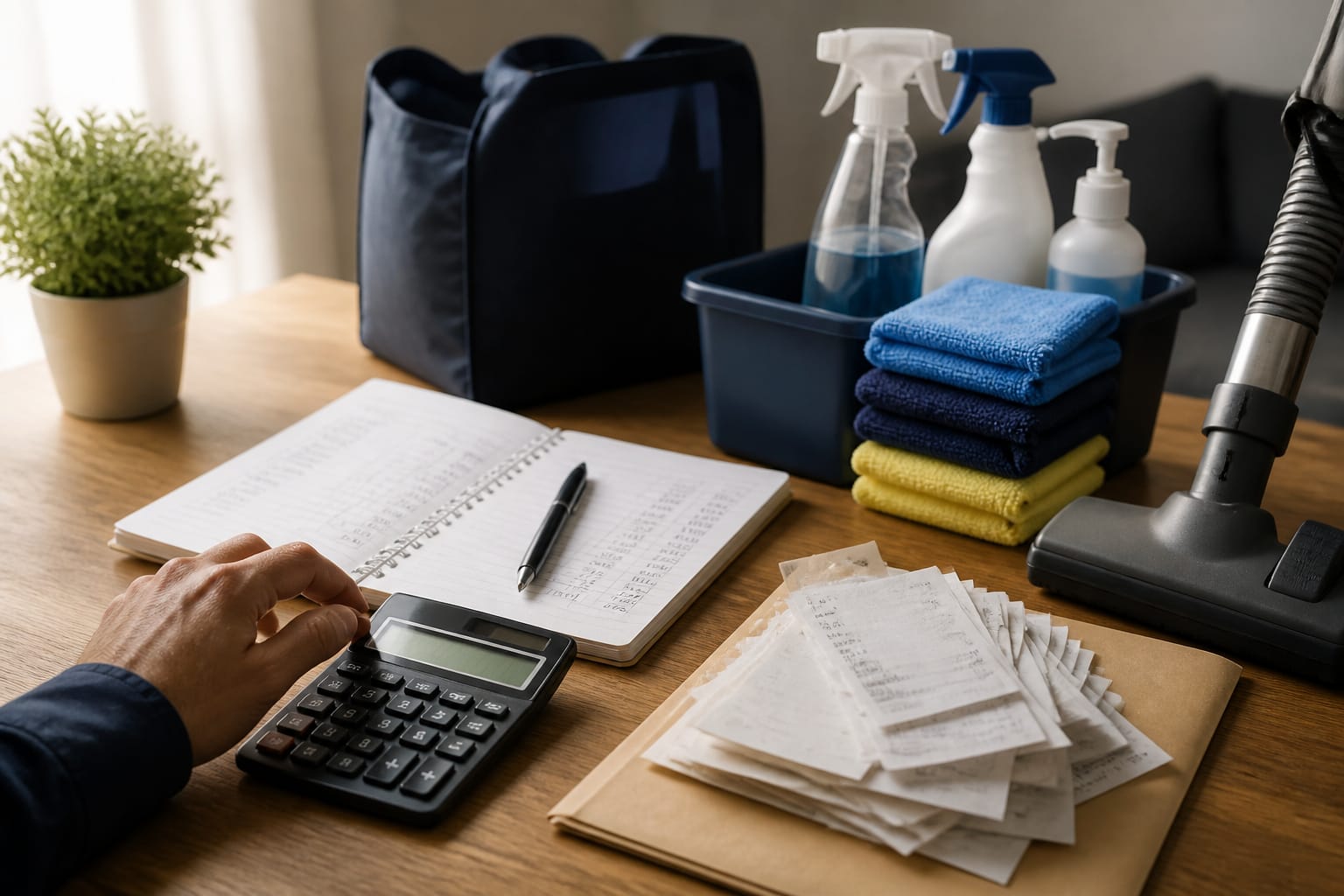
Residential cleaning is accessible to enter, but building a dependable company requires more than supplies and transportation. The business has to sell trust, price labor correctly, manage access to private homes and deliver the same standard repeatedly across different properties.
A strong launch keeps the initial model narrow: a defined service area, a small service menu, a repeatable intake and quote process, and enough financial discipline to know whether recurring clients are actually profitable.
Choose the residential model you want to build
Recurring weekly and biweekly cleaning offers predictable demand, while deep cleans, move-in/move-out work and one-time projects can carry different price and staffing requirements. Decide which work is the core and which services are add-ons.
ISSA's residential business-plan guidance emphasizes defining services, target customers, operations, staffing and financial assumptions before launch. That planning reduces the temptation to accept every type of job.
Set a practical service area
Travel is part of production even when the customer does not see it. A wide territory can create unpaid gaps, late arrivals and lower daily capacity.
Begin with a radius or cluster you can serve reliably. As demand grows, compare lead volume with route density before expanding.
Build a realistic startup budget
List registration, insurance, basic equipment, supplies, transportation needs, website or local marketing, uniforms, software and working capital. Separate one-time setup costs from monthly expenses.
The SBA recommends calculating startup costs before launch because the exercise helps estimate funding needs and break-even. Avoid buying commercial-scale equipment before the service mix requires it.
Price from cleaner-hours and scope
Estimate the labor required for each service and use fully loaded labor cost rather than wages alone. BLS reported a national mean hourly wage of $17.83 for maids and housekeeping cleaners in May 2025; local labor markets and your actual employer costs may differ.
Create clear rules for first-time deep cleans, recurring frequency, bathrooms, pets, interior appliances and other workload drivers.
Create a professional intake and quote process
Ask for property details, frequency, condition, access needs and requested add-ons before promising a price. Use photos or walkthroughs when the scope cannot be understood reliably from basic questions.
Treat trust as an operating requirement
Residential cleaners enter private spaces and may encounter keys, alarm codes, pets and valuables. Document access procedures, hiring standards, key handling and incident escalation.
Insurance and bonding choices should match the actual risk and customer expectations. Requirements vary by state and client, so verify applicable rules rather than relying on generic checklists.
Standardize cleaning before you scale the team
Define room-by-room expectations, product rules, quality checks and what happens when a client requests work outside scope. OSHA identifies chemical, equipment and physical-environment hazards in cleaning work, making safety training part of operational quality.
A checklist should support judgment, not replace training. Use it to make the expected result visible and consistent.
Build recurring demand and measure retention
Local search, referrals and partnerships can all help acquire households, but recurring conversion and retention determine the quality of growth. Track which lead sources produce clients that stay and fit your routes.
Measure actual job time, client frequency, re-cleans, cancellations and contribution by account. Residential scale becomes much easier when the owner knows which homes fit the operating model.
Final takeaway
Residential cleaning scales when trust, recurring service, pricing and standardized delivery grow together.
Frequently asked questions
- Is residential cleaning a good business to start small?
- It can be started with a relatively simple operating model, but success still depends on legal setup, insurance, pricing, trust, route density and consistent service.
- Should I start with recurring or one-time cleaning?
- Recurring work provides predictability, while one-time services can help fill capacity and generate leads. Choose a core model and price each service according to its workload.
- Do I need employees immediately?
- No. Many owners begin by performing work themselves, then hire when demand and economics support it. Plan the process before capacity becomes a crisis.
- What should I standardize first?
- Standardize intake, service scope, quoting, access information, cleaning checklist, quality follow-up and basic job-cost tracking.
Sources and further reading
- ISSA — Residential Cleaning Business Plan
- U.S. Small Business Administration — Calculate startup costs
- U.S. Small Business Administration — Launch your business
- U.S. Bureau of Labor Statistics — Occupational Employment and Wage Statistics
- Occupational Safety and Health Administration — Cleaning Industry
Editorial note: This guide is written for U.S. cleaning business owners and founders. It provides general business information, not individualized legal, tax, insurance or accounting advice.