A cleaning company can look simple from the outside: buy supplies, find customers, clean well, get paid. The businesses that last are built on a more disciplined foundation. They know exactly what they sell, what each job costs, who their ideal customer is, how work is documented, and how a client moves from inquiry to recurring service.
The U.S. market is large and labor-intensive. Bureau of Labor Statistics data for May 2025 counted more than 3 million building-cleaning workers across janitorial, maid and related occupations. That scale creates opportunity, but it also means a new company competes with solo cleaners, local operators, franchises and established commercial contractors. The advantage of a startup is not size. It is clarity, responsiveness and consistency.
Choose a narrow starting position
Do not begin with a list of every cleaning service you could possibly offer. Pick a starting customer and a repeatable job. A residential operator might focus on recurring home cleaning within a tight service radius. A commercial operator might begin with small offices, professional practices or retail locations that need predictable evening service.
A narrow starting position makes pricing easier, reduces the equipment you need, sharpens your marketing and lets you build checklists that crews can actually follow. You can add move-in/move-out, deep cleaning, post-construction, windows or specialty services after the core operation works.
Validate demand before buying too much equipment
Use local market research to answer practical questions: Which neighborhoods or business districts have the right customers? What service frequency is common? Who are the visible competitors? What promises do they make? Which reviews reveal recurring complaints such as lateness, inconsistent quality or poor communication?
The SBA recommends combining market research with competitive analysis before committing resources. For a cleaning company, that can be as simple as studying local search results, talking with property managers, reviewing competitor service menus and testing a small referral or paid campaign before buying a large inventory of equipment.
Set up the business correctly
Choose a legal structure, register the business where required, obtain tax IDs that apply to your situation, open a dedicated business bank account and verify state, county and city licensing requirements. The SBA notes that licenses, permits and fees vary by business activity and location. The IRS also advises new businesses to select the appropriate structure and determine whether an Employer Identification Number is required.
Cleaning itself is usually a local service business, but specialized work can create additional rules. Do not assume that a registration in one city covers every jurisdiction where you plan to operate.
Protect the business before entering a client property
At minimum, discuss general liability coverage with a licensed insurance professional. Depending on your operation, you may also need commercial auto, property or equipment coverage, workers’ compensation, a bond or other policies. Commercial clients often ask for proof of insurance before awarding work.
This is not paperwork to postpone until the company grows. A cleaner works around floors, furniture, electronics, chemicals, keys and private property. One damaged surface or injury can be much more expensive than the first months of premiums.
Build pricing from costs, not from competitors alone
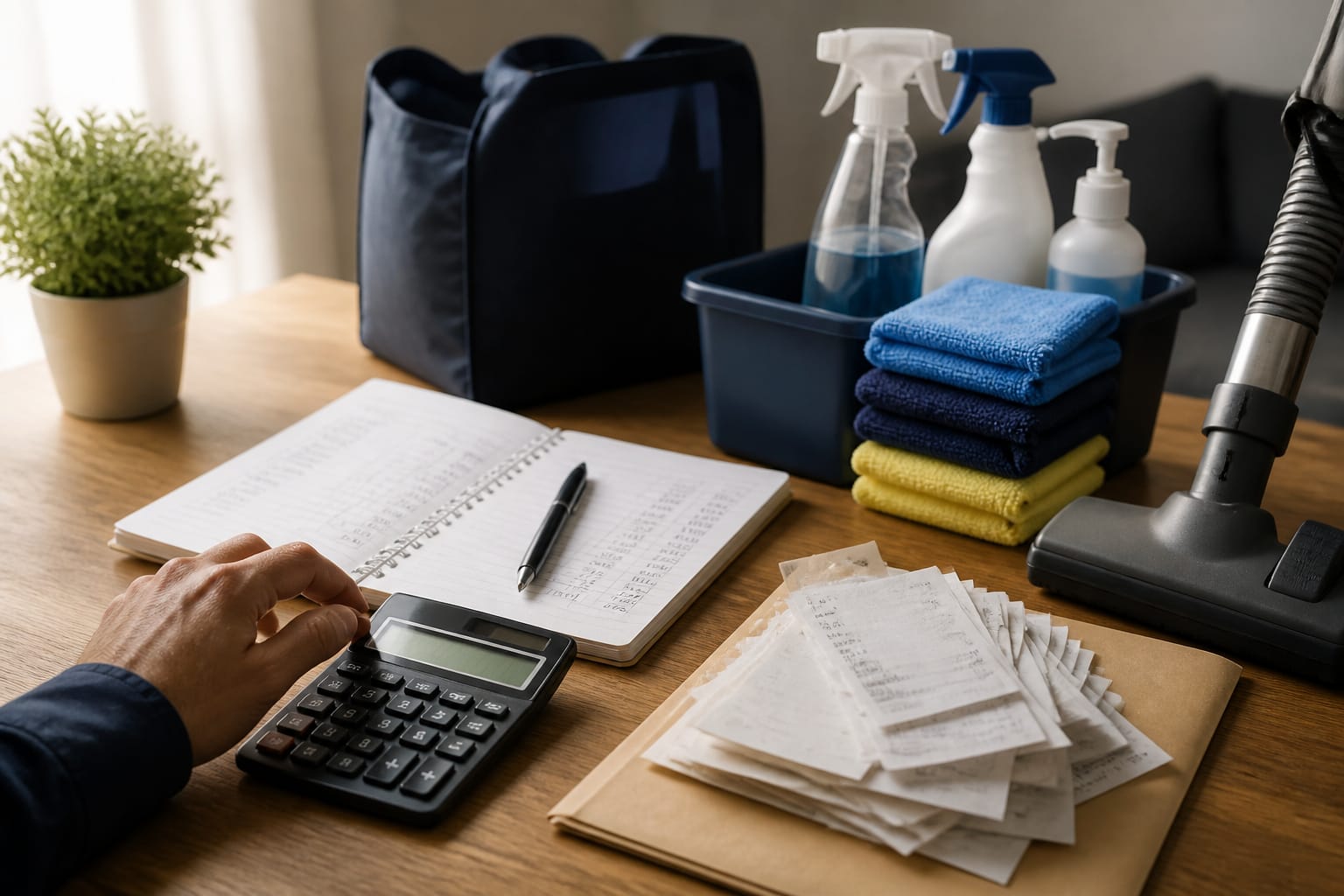
Competitor prices are useful context, but they do not tell you whether your own job is profitable. Estimate labor time, your all-in labor cost, supplies, travel, card fees, overhead and the margin you need. Then decide whether the service is best sold at a flat price, hourly rate, square-foot rate or another structure.
As a reality check, BLS May 2025 data reported a national mean hourly wage of $18.64 for janitors and cleaners, excluding maids and housekeeping cleaners, and $17.83 for maids and housekeeping cleaners. An employer’s true labor cost is higher once payroll taxes, insurance, paid nonproductive time, recruiting and supervision are included.
Design the client journey before the first lead arrives
A professional workflow can be simple: inquiry, qualification, estimate, approval, intake, schedule, service checklist, quality follow-up, invoice and recurring booking. Decide who owns each step and what information must be captured.
Get the first customers through trust, not discounts alone
Start with channels that let a local customer verify you: a complete Google Business Profile, a clear website, referrals, relationships with real estate professionals and property managers, neighborhood groups, local partnerships and targeted outreach. Ask real customers for honest reviews after successful service. Google notes that reviews can help a business stand out in Search and Maps.
Avoid building a reputation around being the cheapest cleaner. A better early promise is reliability: clear scope, on-time arrival, documented work, fast communication and an easy way to solve problems.
Standardize before you hire
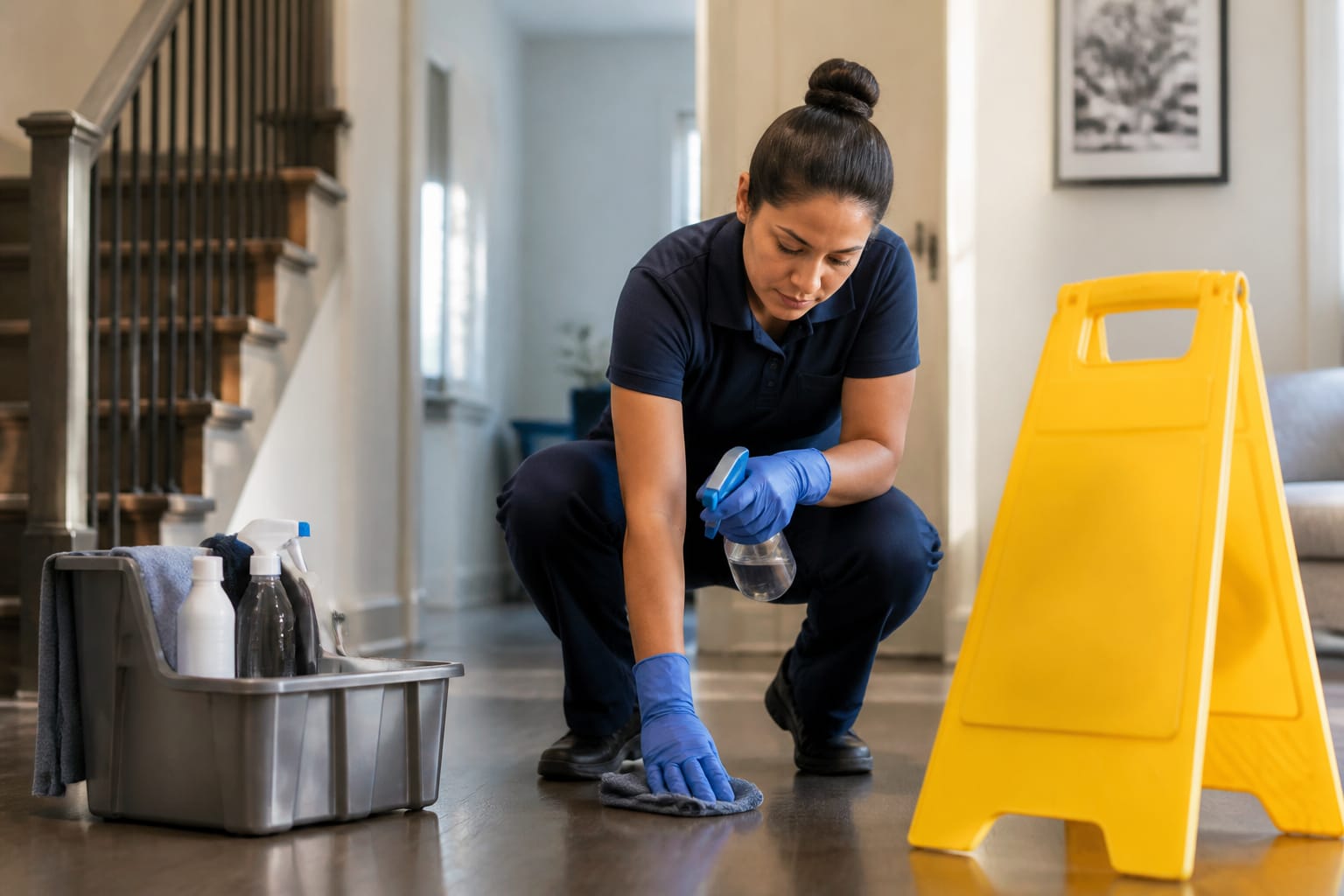
Write the standard while you are still doing or supervising the work yourself. Define room-by-room tasks, products, safety rules, expected completion signals, photo requirements, issue escalation and quality checks. OSHA warns that cleaning employees can be exposed to hazardous chemicals, equipment hazards and other workplace risks, so training cannot be limited to “watch someone clean once.”
When the owner eventually hires, documented processes shorten training and make quality measurable. They also reduce dependence on one experienced cleaner who carries every procedure in memory.
Measure the numbers that determine survival
Track leads, quote acceptance rate, average ticket, recurring-client percentage, labor hours per job, revenue per labor hour, re-clean rate, travel time and gross margin by service. These metrics show whether growth is healthy or simply creating more work.
The goal is to reach a point where the owner can see the business, not just feel busy. That visibility is what turns a cleaning job into a company.
Final takeaway
Start narrow, price from real costs, document the work and build a repeatable client journey before you chase scale.
Frequently asked questions
- How much money do I need to start a cleaning business?
- There is no single national amount. A solo residential startup can begin lean, while a commercial operation with employees, vehicles and equipment requires more capital. Build a line-by-line startup budget for registration, insurance, supplies, equipment, marketing, software and working capital.
- Do I need an LLC to start?
- Not necessarily. The right structure depends on tax, liability and ownership considerations. Compare sole proprietorship, LLC and other structures with qualified legal or tax advice in your state.
- Should I start residential or commercial cleaning?
- Residential can be faster to enter and easier to sell locally. Commercial can produce larger recurring contracts but usually has a longer sales cycle and more formal insurance, bidding and service requirements.
- What should I set up before taking the first booking?
- At minimum: service scope, pricing logic, quote or estimate process, payment terms, insurance, client intake information, scheduling, a cleaning checklist and a way to document the job.
Sources and further reading
- U.S. Small Business Administration — Launch your business
- U.S. Small Business Administration — Plan your business
- Internal Revenue Service — What people need to know when starting a business
- U.S. Bureau of Labor Statistics — Occupational Employment and Wage Statistics
- Occupational Safety and Health Administration — Cleaning Industry
- Google Business Profile Help — Tips to get more reviews
Editorial note: This guide is written for U.S. cleaning business owners and founders. It provides general business information, not individualized legal, tax, insurance or accounting advice.